The Cost of Raising a Child Is Rising, Why Child Maintenance Matters
- Deanna Newell
- Mar 19
- 3 min read
Raising a child in the UK is no small financial commitment.
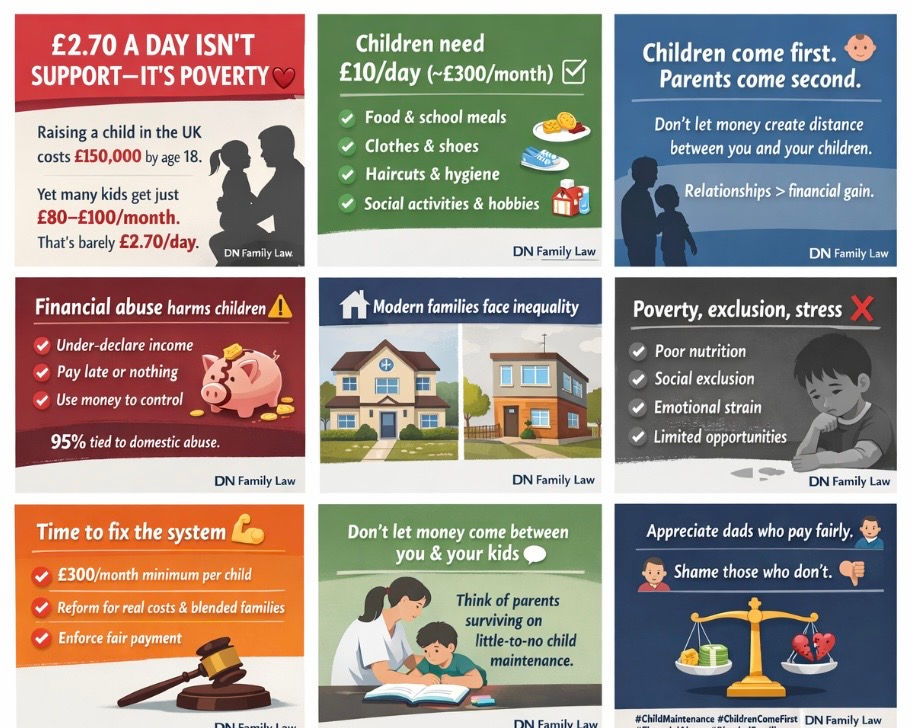
Current estimates place the cost at over £150,000 by the time a child turns 18, and that figure continues to climb. And yet for far too many families, the financial support designed to ensure a child’s wellbeing simply doesn’t reflect reality.
This gap isn’t just about money. It’s about fairness, stability, and the kind of childhood we, as a society, are willing to accept.
Children Come First
Children should always come first. Parents come second.
If you’re a parent who has secured a fair divorce settlement and receives or pays consistent child maintenance, that matters more than you might realise. It sets a standard. But the reality is stark: only a small minority of parents go beyond the minimum and contribute in a way that truly reflects the cost of raising a child.
Meanwhile, many primary carers, most of them mothers are left holding everything together. They work long hours, juggle childcare, and stretch every pound, often still falling short of what their children need.
Financial Abuse Is Real
When a parent under-declares income, pays late, or avoids child maintenance altogether, it’s not just a financial failure, it’s control.
This is economic abuse.
It often exists alongside broader patterns of coercion and imbalance, where one parent holds power by limiting access to financial resources. The real victims are not just the mothers struggling to cope, but the children, whose quality of life is directly affected.
The Reality of Costs
The basics are getting more expensive by the month:
Food prices continue to rise
Energy bills remain unpredictable
School-related costs, from uniforms to trips, add constant pressure
For primary parents, full-time work is often unrealistic due to childcare responsibilities. Part-time work becomes the default, not by choice but by necessity.
This is why a minimum of £300 per child per month is not excessive, it’s essential.
That figure covers:-
School meals
Clothing and shoes
Basic hygiene and haircuts
Affordable activities that allow children to feel included
Without this level of support, children don’t just miss out on “extras.”
They miss out on belonging.
When Maintenance Falls Short
Many children receive as little as £80 – £100 per month in maintenance.
That’s roughly £2.70 a day.
The actual cost? Closer to £10 per day.
That gap is not trivial. It is the difference between:-
Coping and struggling
Inclusion and isolation
Stability and survival
The Consequences Are Long-Term
When maintenance is insufficient, or absent the effects go far beyond the immediate:-
Poverty and poor nutrition
Social exclusion
Emotional strain within the home
Over time, this leads to:-
Reduced opportunities
Lower educational outcomes
Cycles of inequality repeating across generations
This is not just a financial issue. It is a child welfare issue.
Blended Families, Unequal Lives
Modern families are more complex than ever. Blended families are common, but financial realities within them are often deeply unequal.
One household may offer holidays, hobbies, and comfort. The other may struggle with rent, bills, and basic necessities.
Children notice. They compare. They feel the imbalance.
These differences don’t just affect material life, they shape confidence, identity, and emotional wellbeing in ways that can last a lifetime.
Divorce Settlements and Financial Imbalance
Divorce settlements can make things worse.
Some parents walk away financially secure, mortgage-free, stable, and comfortable. Others are left covering rent, bills, and the full cost of raising a child with minimal support.
When child maintenance is then underpaid or avoided, the result isn’t just unfair, it can push families into chronic stress and poverty.
The System Must Catch Up
Child maintenance systems were built with good intentions. But families have changed. Costs have risen. Realities are different.
Without reform:-
The burden stays on the parent already carrying the most
Children experience inequality between homes
Social divides continue to widen
The Reality in Numbers
£2.70 a day isn’t supporting, it’s survival.
£150,000+ to raise a child
£80 – £100/month is common maintenance
£300/month reflects real basic needs
This isn’t about luxury. It’s about dignity.
A Call to Action
It’s time for change:-
Introduce a £300/month minimum per child
Update systems to reflect real living costs and modern family structures
Strengthen enforcement to prevent manipulation and ensure consistency
Children deserve stability in both homes. Anything less should not be acceptable.
A Message to Parents
If you are in a position to pay fairly, do it.
Not because you have to, but because your child deserves it.
Money should never become a barrier between you and your child’s wellbeing.
And for those doing everything on very little: your effort matters, even when the system falls short.
It’s time to recognise the parents who step up, and hold accountable those who don’t.
Because at the heart of this issue is a simple truth;
Children come first. Always.
Deanna Newell Family Law
Advocacy for truth-tellers, survivors, and the children who deserve better


